




Childhood myopia and natural light: protecting your child’s vision this summer

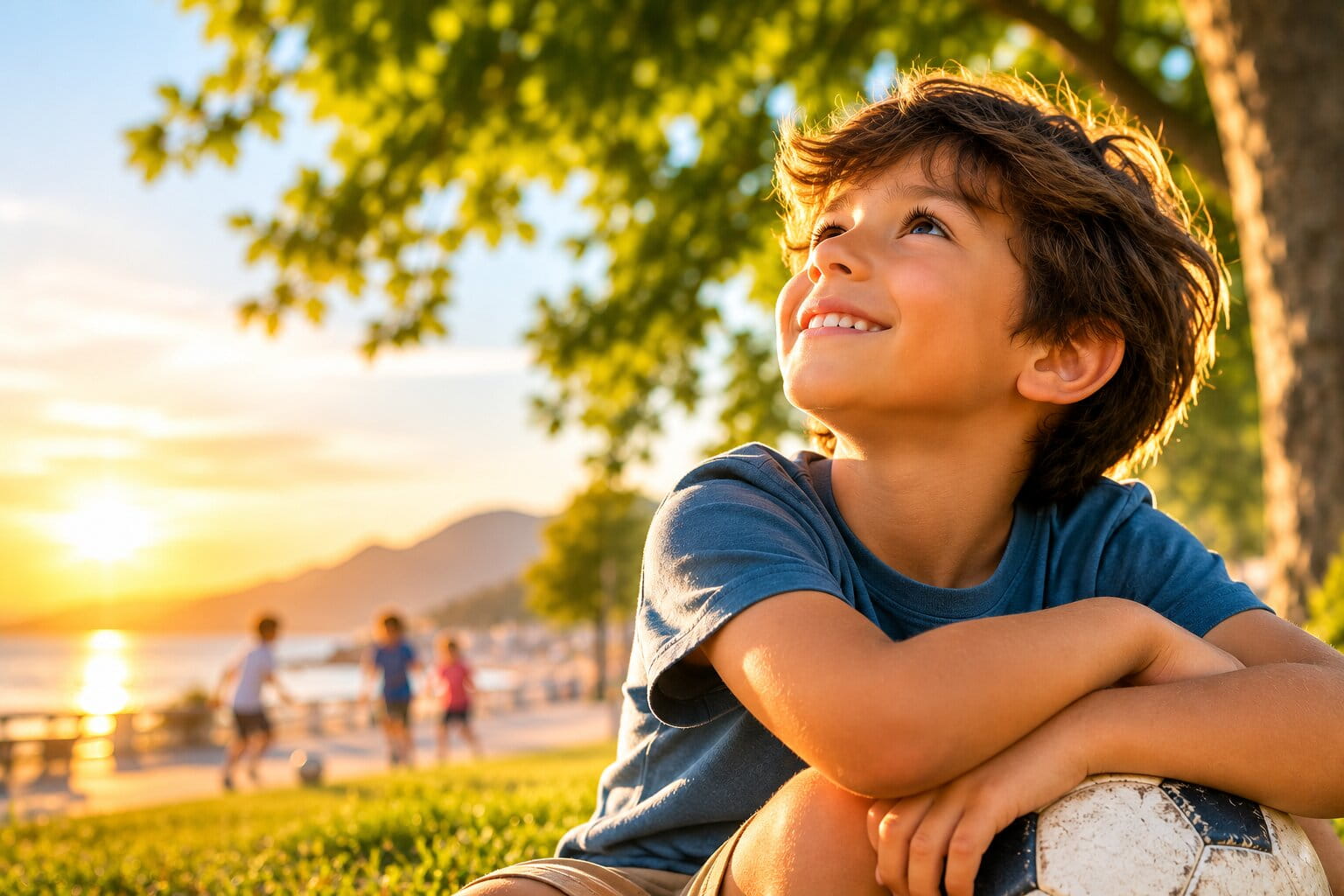
Summer, Natural Light and Childhood Myopia: A Great Opportunity to Protect Your Child’s Vision
Summer is the perfect time for children to spend more time outdoors. Playing in the park, cycling, going to the beach or simply enjoying outdoor activities all contribute to their physical and emotional development. However, there is another important benefit that many parents are unaware of: spending time outdoors may help prevent the onset and slow the progression of childhood myopia (short-sightedness).
Over the past decade, numerous scientific studies, including randomized clinical trials and meta-analyses, have consistently shown that children who spend more time outdoors have a lower risk of developing myopia. In children who are already myopic, outdoor time can also help slow its progression.
Why does natural light protect against myopia?
For many years, researchers believed that the main benefit of outdoor activities was that children spent more time looking into the distance, reducing the constant focusing effort required for near work such as reading or using digital devices.
Current research suggests that this is only part of the explanation. Evidence indicates that the key protective factor is the intensity of natural light. When the retina is exposed to bright outdoor light, it increases the release of dopamine, a naturally occurring neurotransmitter that helps regulate eye growth. Higher retinal dopamine levels appear to slow excessive elongation of the eyeball, which is the structural change responsible for the development of myopia.
Importantly, this does not mean that children should spend hours under direct sunlight. Studies show that simply being outdoors, even in the shade or on cloudy days, provides much higher light intensity than indoor environments. This difference alone seems sufficient to produce a protective effect.
How much outdoor time is recommended?
Although recommendations vary slightly between studies, there is growing scientific consensus that children should spend at least two hours outdoors every day whenever possible.
- Playing in the park
- Cycling
- Walking outdoors
- Reading outside
- Enjoying recreational outdoor activities
This does not necessarily require organised sports. Simply increasing daily exposure to natural light can support healthy visual development.
Summer: the ideal time to build healthy habits
During the school year, children spend many hours indoors, reading, writing, studying and using digital devices. Summer holidays offer an excellent opportunity to balance this lifestyle by increasing time spent outside.
Besides improving cardiovascular health, physical fitness and emotional well-being, daily exposure to natural light may also play an important role in protecting children’s visual development.
A recommendation for the whole year
Although summer makes outdoor activities easier, this recommendation should not be limited to the holiday season.
Encouraging children to spend time outdoors throughout the year is one of the simplest, safest and most evidence-based strategies currently available to reduce the risk of childhood myopia. The International Myopia Institute considers increased outdoor time one of the strongest non-pharmacological measures for myopia prevention.
At Sol Eyes, we believe that prevention begins long before vision problems appear. Encouraging children to play outdoors, limiting excessive screen time and scheduling regular eye examinations are three simple habits that can help protect their eyesight for many years to come.
Medical review
Reviewed by Dr. Antonio Soler García, Medical Director at SolEyes Fuengirola.
Medical license number: 292907906.
Last updated: 2026-07-18.
Important notice
This content is for informational purposes only and does not replace professional medical advice.


