




PRK or LASIK: choosing well matter

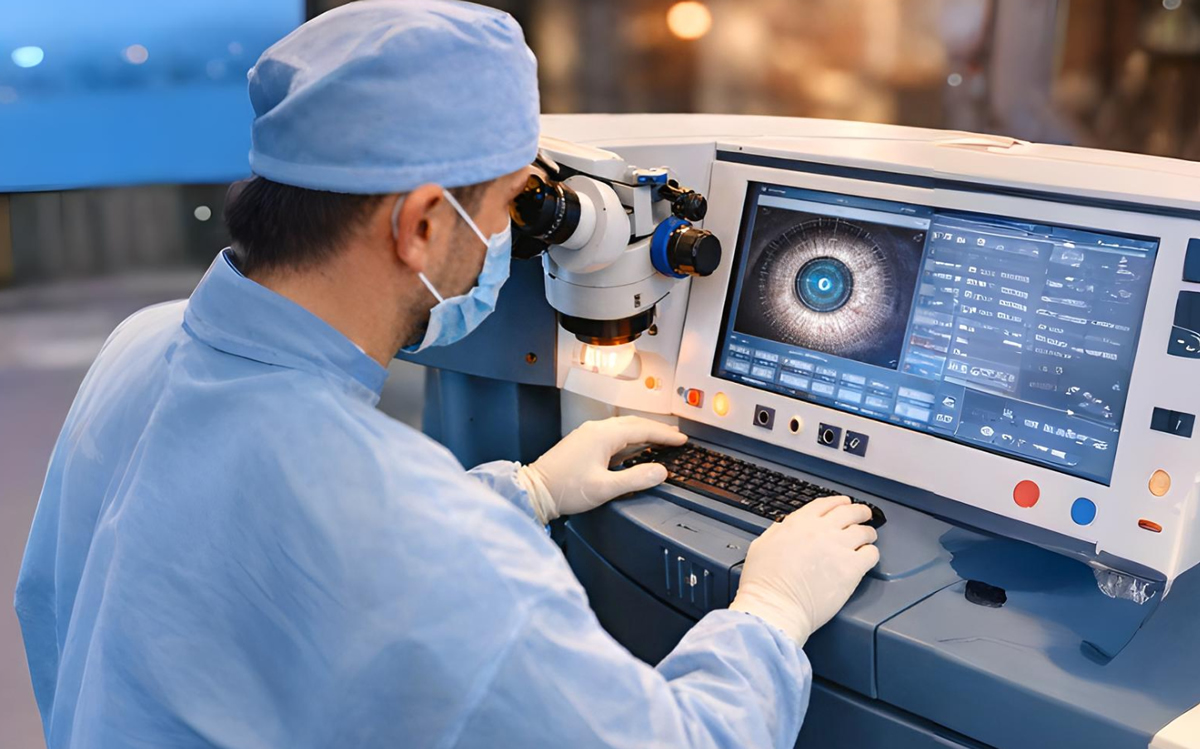
PRK or LASIK: choosing well matters
PRK was widely used for years. Although LASIK became dominant, modern transepithelial PRK—where the laser removes the epithelium and performs the ablation in a single no‑touch step—has brought PRK back to the front line by reducing manipulation, infection risk and improving stability and reproducibility.
Be upfront with patients
- PRK can be painful for 24–36 h post‑op.
- Visual recovery is slower (≈2–4 weeks) vs LASIK.
Therefore, PRK is not ideal when very rapid recovery is required.
Corneal haze today
“Haze” used to be a classic concern. With a tailored mitomycin‑C (MMC) protocol according to ablation depth, it has become uncommon, and when it appears, it is usually manageable. Contemporary evidence supports MMC as anti‑haze prophylaxis in higher‑risk cases without compromising endothelial density when used briefly at standard concentration.
What about LASIK?
LASIK (especially femtosecond LASIK) remains excellent thanks to its fast recovery. Still, the most feared complications are flap‑related; femtosecond lasers greatly reduce these risks but do not eliminate them.
My personal tip
In low‑to‑moderate myopia (≈ −1.50 to −3/−4 D), I often prefer PRK. I honestly tell patients it is the technique I would choose for myself within this range. The key is not the “newest” method, but the best‑indicated one for each eye and each patient.
Considering surgery? See our eye surgery (refractive options included) and book online.
Medical review
Content reviewed by Dr. Antonio Soler García,
Medical Director at Soleyes Fuengirola.
Medical licence (Spain): 292907906
Updated: 20/01/2026
Disclaimer
This article is educational and does not replace personalised medical advice.
If you have symptoms or questions, please book an appointment.


