




Glasses Myths: Do Glasses Really Make Your Eyesight Worse?

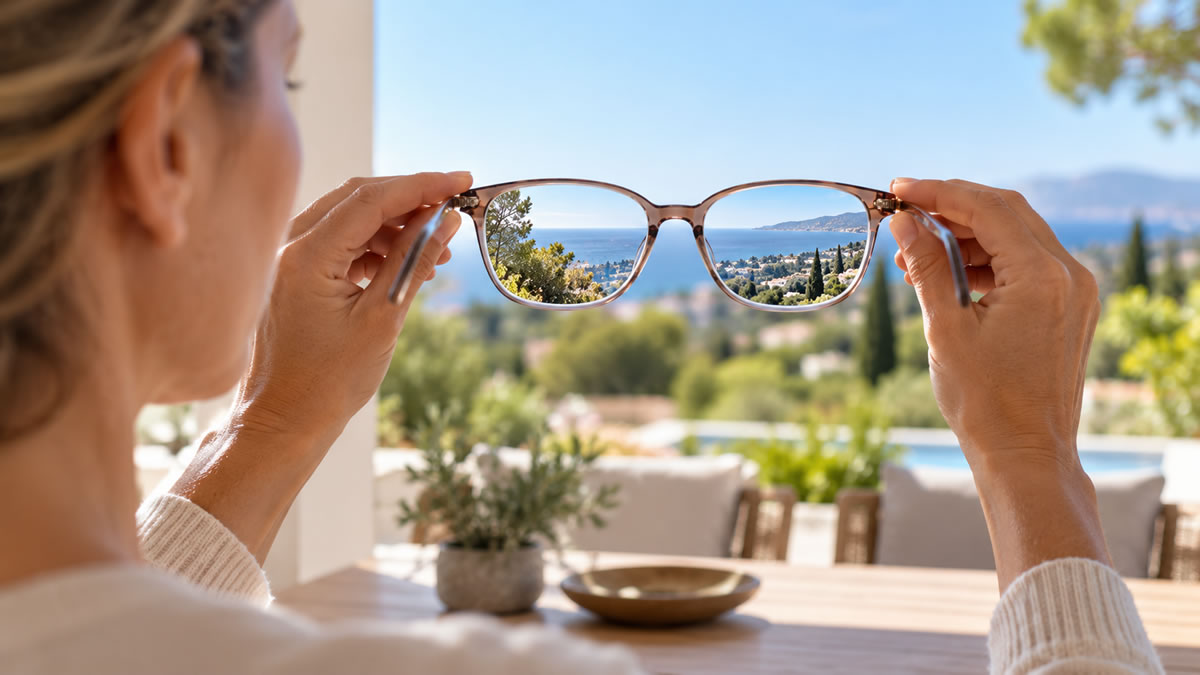
Ophthalmology Myths: Does Wearing Glasses Make Your Eyes Worse?
“Doctor, ever since I started wearing glasses, I feel that I see worse without them.”
This is a statement ophthalmologists hear frequently. Many people believe that glasses make the eyes lazy, weaken their focusing ability or create dependence on them.
But is there any scientific evidence to support this idea?
Do glasses weaken the eyes?
The answer is no.
Glasses are an optical aid that allows light to focus correctly on the retina. When a person has myopia, hyperopia or astigmatism, glasses compensate for the refractive error and provide clearer vision.
However, wearing properly prescribed glasses does not change the structure of the eye and does not cause the prescription to increase.
Why does vision seem worse when we remove our glasses?
Part of the explanation lies in visual perception.
When we have lived with blurred vision for a long time, we can become accustomed to it. Once we experience clearer vision with glasses, the difference becomes much more noticeable when we take them off.
This does not necessarily mean that eyesight has worsened. We have simply become more aware of the difference between corrected and uncorrected vision.
Some refractive errors also change naturally over time.
Myopia can progress during childhood and adolescence, while presbyopia usually begins to develop around the age of 40 to 45 and gradually increases thereafter.
These changes are not caused by wearing glasses.
Should we avoid glasses to strengthen our eyes?
There is no convincing scientific evidence that avoiding glasses when they are needed makes the eyes stronger or stops refractive errors from progressing.
On the contrary, insufficient correction may make everyday activities more difficult and, in some cases, contribute to visual strain and discomfort.
What about children?
In children, proper optical correction is especially important because the visual system is still developing.
Significant uncorrected refractive errors, particularly when there is a major difference between the two eyes, may contribute to amblyopia if not corrected appropriately.
Research has also failed to demonstrate that deliberately under-correcting myopia slows its progression in children.
Today there are even specialised spectacle lenses designed for myopia control, which use specific optical principles to slow progression in certain children.
What does the scientific evidence say?
The National Eye Institute clearly states that glasses improve vision while they are worn, but they do not weaken the eyes or make eyesight worse.
Cochrane systematic reviews on childhood myopia control likewise do not support under-correction as an effective method of slowing myopia progression.
In summary
MYTH: “If you start wearing glasses, your eyes will become dependent on them and you will need stronger prescriptions over time.”
FACT: Properly prescribed glasses do not weaken the eyes and do not create physical dependence. They simply compensate for a refractive error and allow clearer vision.
Seeing better with glasses does not mean that your eyes have become dependent on them. It means you are using the correction your eyes require.
Medically Reviewed Information
Content prepared and reviewed by Antonio Soler, ophthalmic surgeon and Medical Director of Soleyes Eye Clinic.
This article is intended for informational purposes only and does not replace an individual medical consultation. If you experience visual changes or have concerns regarding your prescription, a comprehensive eye examination is recommended.


